Tuesday, July 2, 2013

Convictions lead us to action


            Proof, attestation, confirmation, pruweba… These are the words of someone who wants to establish authority that what he believes is true. Thomas in our gospel today is searching for such proof, “unless I see the mark of the nails in His hands and put my finger into the nail marks and put my hand into his side, I will not believe”. After the insignificant event that happened to Jesus on the cross, Thomas’ faith has been shattered by confusion and pain. He was looking, for proof to bring back his conviction in following Jesus.
            Thomas was known as a doubter of Jesus’ resurrection. But for me, I think his doubt is not because of loss of faith but rather moved by strong desire to know and take hold of the truth about Jesus’ resurrection so that he may regain his conviction of offering his life for Jesus. He wants more assurance than enthusiastic words; assurance that will change every aspect of his life; assurance that will change his own convictions.
            The dramatic encounter of the Risen Lord change the doubtful state, and with great conviction utters his new found faith in the memorable words “my Lord and my God”. Thomas was seemingly a late believer of Jesus’ resurrection yet never too late to boldly pronounce the most profound and radical confession of faith.
Tradition holds that Thomas preached the gospel in India and eventually suffered martyrdom. That’s how conviction works, conviction that is founded on a close and personal encounter with Jesus. I think this also holds true to us who are called to respond this calling, to encounter the Risen Lord in a very special and intimate way that will eventually change our perspectives, convictions, priorities, our sense of mission, fulfillment and joy.
            Lastly, allow me to shift our gaze on Jesus. When he appeared to Thomas, he did not condemn him rather he accepted the kind or level of faith that Thomas had. Indeed, Jesus meets us where we are. He did not impose rather he purifies our convictions. Let us therefore turn to this God, who has a heart that patiently respects our own pace towards maturity and who knows how to understand our human frailties. As we continue to respond to this kind of life, to which we are called, let us focus our gaze on the Risen Christ and unite our convictions with Him that we may always grow in faith hopeful to hear him saying “blessed are those who have not seen and have believed”.

Friday, March 8, 2013

Memoir on the ‘Upper Room’


“Do this in remembrance of me” – meaningful words of farewell from a historical man who is about to face the road of uncertainty, fear and confusion. Yet such meaningful command of Jesus has been perpetually followed by the early Christians that eventually contribute to the missionary character of the Church to preach, to teach and to lead. The event that took place in that secluded room initiated a new way of making Christ presence alive through the prophetic, priestly and kingly role of the ministerial priesthood. 
The Ministry of the Word        
Priest is said to be the ambassador of Christ to his people.  As a ‘spokesperson’ of God to his people, the decree on the Ministry and life of Priests emphasizes that priests should be conscious of their responsibility not to teach their own wisdom but of God’s word (PO4). In making homilies, priest are encourage to make relevant the gospel message to the very situation of the people but it should not be self- centered. They should not expound the word of God in merely general and abstract terms, but must apply the perennial truth of the gospel to the concrete circumstances of life. Pope John Paul II, also stress that proclaiming the word, the priest must be conscious that his words, like those of Christ, are not his own but those of the One who has sent him. He proclaims the word in his capacity as a qualified minister - a sharer in the prophetic authority of Christ and the Church. In order to be sure of transmitting the gospel in its fullness, the priest must have a special sensitivity, love, and docility to the living tradition of the Church and to the magisterium as the authoritative interpreter of the word of God.
            I would like to highlight the important shift in the history of the Church since Vatican II on the new emphasis on evangelization. Pope Paul VI reiterated that to make the church ever better fitted in proclaiming the gospel to the people of the twentieth century, it should incline with the program of Vatican II on aggiornamento. Evangelization, the Pope goes on to say, is the grace and vocation proper to the Church. It exists in order to be missionary, to evangelize, which means, to preach and to teach, to proclaim with authority the word of God. This truth is expressed in an explicit manner in the Vatican II decree Ad Gentes: “The pilgrim Church is missionary by her very nature.
            Another element that I would like to emphasize is on the evangelization of Cultures. Evangelii Nuntiandi pointed out that although the gospel can never be identified with culture, cultures can be more or less compatible with the gospel. The gospel is capable of regenerating and permeating a culture without becoming disrespectful and exploitative to other cultures. The culture is important, because the church, in order to evangelize, must borrow elements from the culture. It is good to note that priest can proclaim the gospel in a manner that people can appreciate the richness of the message of Christ without disregarding ones culture. Here inculturation is seen as an important element to consider in the work of evangelization.
The Ministry of Worship
Every time I attend presbyterial ordination I always find myself spiritually high when I hear this familiar line from the ordaining prelate “buhata sa imong kinabuhi ang misterio nga imong isaulog”. I firmly believe that this is an important aspect in the life of a priest, that is, to live daily the mystery he celebrates. John Paul II in his 1980 Holy Thursday letter, Dominicae Cenae holds that the Eucharist is the principal and central raison d’ etre of the sacrament of the priesthood, which effectively came into being at the moment of the institution of the Eucharist. Furthermore, priest fulfills his principal mission when he celebrates the Eucharist and this would become more meaningful and complete when he himself allows the depth of that mystery to become visible in his life, so that the grace of the Eucharist will shine forth in people’s hearts and minds through his ministry. This is the supreme exercise of the priestly function – to celebrate the Eucharist as the source and summit of all Christian life.
          Another important aspect of priesthood is on liturgical celebration. It is said that all the sacraments are sacraments of the Church. In administering the sacraments, the celebrant exercises a properly sacred ministry of which he participate in the priestly power of Christ, as the sacrament of ordination has made him capable of doing. The priest does it on behalf of the Church and as its authorized agent.  Agent, in this context, does not mean “substitute”. The priest does not perform liturgical actions in place of the Church, but the church acts in and through him as its representative. Therefore, priest should act according to what the Church prescribes. The familiar phrase, which I learn in my early years of theological formation, “you do not own the liturgy”, keeps on lingering into my ears as a constant reminder to be always faithful to what the church prescribes.
            The expression in persona Christi fits well into the context of divine forgiveness.  Priest acts in the sacrament of penance in the person of Christ, in whose name he absolves the sinner. Pope John Paul II calls it the tribunal of mercy rather than of strict and rigorous justice. Moreover, he continued in stressing that, of all priestly ministries this is undoubtedly the most difficult and sensitive; the most exhausting and demanding but also one of the most beautiful and consoling function of the priest in the world.  It is a great task to hear the sins of the world but also a wonderful gift and privilege to be an instrumental means of reconciling the world with God. 
The Pastoral Ministry
          In my early years as a seminarian, I remember the words of my bishop quoting the opening statement of the encyclical Pastores dabo vobis, taken from the book of Jeremiah -“I will give you shepherds after my own heart”. There I began to realize the great mission a priest is carrying, that is, to be a shepherd. What makes it great is not the task of being a shepherd only but the qualifier that goes with it - ‘after my own heart’ which implies configuration to Christ. We can be an efficient pastor but the greater challenge would be to make real the presence of Christ in our priesthood.
          Lumen Gentium (20) describe the office of the bishop as a task of shepherding the flock of Christ. The ministerial priesthood belongs especially to bishops but also to presbyters as associates of bishops under Jesus Christ the Chief Shepherd. It is on this regard that priests should bear in mind that they are extensions and representatives of the bishop within the parish. They did not stand as a single entity, but rather always in communion with the bishop. His role as a shepherd in the community of faithful is always link to the bishop, whom the fullness of the priesthood rest. 
            Shepherding here does not only mean leading the faithful in their spiritual journey. It also includes even to the secular affairs especially in moments of moral issues and social crises that endangers the welfare of all. Here priests function as a community leader. To further illustrate, Walter Kasper briefly pointed out that in the New Testament, the Christian leaders are designated not by sacral terms but rather by secular terms such as episcopos (supervisors), presbyteros (elder) and diakonos (servant). I would like to believe, especially in this present context that being a priest as a community leader does not mean practicing paternalistic method of leadership in which everything comes from him. Effective pastoral leader must be capable of recognizing the various charisms of the faithful so that communion, collaboration and mission within the community of believers may be facilitated.
            Another important aspect on the pastoral ministry is on mission. John Paul II in his encyclical Redemtoris Missio, profoundly declares that priests must be filled with special missionary zeal and commitment especially in those areas where Christians are in a minority so that this small fraction of the members of the Church would not be deprived by the spiritual goods they must enjoy. But in this new era of missionary task, it does not only limit its boundaries to those who belong to the Church but rather be extended to other ecclesial communities and even to non-Christians as we engaging into dialogue for peace, justice and integrity of creation. By that our missionary work would be more enriching and worthwhile especially in our context in Mindanao.   
            "Were not our hearts burning within us while he was talking to us on the road?”(Lk.24:32). The experience of recognizing the risen Lord on the road to Emmaus kindled the disciples to go back to Jerusalem and proclaim what they experienced. The encounter was so strong that their frustrated hearts turns-out to be burning with zeal to continue the task entrusted to them.  The same gift is needed in sustaining a life of ministerial priesthood - to encounter the risen Christ in a very personal way and to recognize Him in various pastoral works in the parish. Priest is called to establish enough level of holiness for a lifelong commitment of preaching and teaching, of presiding fruitfully over the worship of the community and of directing the people of God towards its appointed goal. Some would say ‘my work is my prayer’. This has become cliché among priest and I know that there can be no substitute to formal prayer but if this would be real in some sense, then this is a kind of spirituality which can also give meaning to what the priest celebrates. It is a moment wherein a priest may intimately encounter the One who called him and celebrates with him together the banquet of the Eucharist in the altar at the upper room.

Sunday, December 23, 2012

The people in darkness have seen a great light.
        The Lord of our longing has conquered the night.
HAPPY CHRISTMAS !!!

Tuesday, December 11, 2012

Tuesday of the 1st Week of Advent (C)


Ang tawo nga mapaubsanun malipayon nga mag-alagad sa Dios
Ang atong unang pagbasa karon, nagsaysay mahitungod sa pag-abot sa Mesiyas nga kaliwat ni David, nga sa dugay na nga panahon gipaabot ug gilauman sa katawhan sa Israel nga muluwas kanila gikan sa kaulipnan. Gipadayag ni Propeta Isaias nga ang pag-abot sa Mesiyas, pinaagi sa gahum sa Espiritu Santo, magdala ug dakong paglaum alang sa tanan. Maangkon nila ang kalinaw, kaangayan ug panaghiusa sa pag-abot sa Mesiyas. Kining gasa sa kaluwasan dili lamang alang sa mga kabus ug mga nipupigan kundili naglangkob kini sa kaluwasan sa tanang kabuhatan.
Ang mga hulagway nga gipadayang ni Propheta Isaias usa ka katingalahan o imposible sa atong mga panghuna-huna. “Magtipon ug puyo ang lobo ug nating karnero, magsalo ug pagkaon ang liyon ug mga nating baka, ang bata magdula diha sa buho sa halas nga malala ug ang batang nilutas mukuot sa lungib sa hagwason”. Kining maong hulagway sa panaghiusa ug kalinaw sa kalibutan usa ka timailhan sa pag abot sa Mesiyas
Si Jesus, nga mao ang Mesiyas, nagpadala sa 72 ka mga lalaki nga iyang mga sumusud aron pagsangyaw ngadto sa mga kasikbit nga mga lungsod. Ang mga gipadala sa maong tahas mibalik nga puno sa kalipay tungod sa daghang mga katingalahang butang nga ilang nasaksihan ug nasinati pinaagi sa paggamit sa Iyang ngalan. Mao nga sa atong ebanghelyo karon si Jesus sa iyang dakong kalipay mibungat sa mga pulong sa pasalamat “Amahan, Ginoo sa langit ug sa yuta, nagpasalamat ako kanimo tungod kay gipadayag mo man ngadto sa mga walay kahibalo ang imong gililong sa mga makinaadmanon ug sa mga may kahibalo”. Nahimong nagmabungahon sila sa pagbuhat sa ilang misyon dili tungod sa ilang katakus, kaalam ug mga talento kundili tungod sa ilang tinud-anay nga pag-ila ug dakong pagsalig kang Kristo. Ang pagka-walay kahibalo wala magpasabot sa kakulang sa kalantip sa pangisip kundili ang hiyas sa  pagdawat sa kamatuoran nga wala kitay mahimo kung ang atong kaugalingon lamang ang atong gisaligan. Nagkinahanglan kita sa panabang ug kaluoy sa Dios aron kita magmabungahon sa atong mga tahas.
In English, it is translated as “Childlike”. They are those who realize their own limitations that by themselves, they don’t have the power to do both simple and amazing things. But my accepting such nothingness, they become more receptive, allowing the Holy Spirit to work in them. Kining maong grasya sa pagkamapaubsanun nga nadawat sa mga sumusunod ni Jesus nakapahimo kanila nga mga maayong magsasangyaw ug malipayon nga nag-alagad diha uban sa panabang sa Dios.
Niining bahina, kita nga naninguha sa pagsunod Kaniya, gi-awhag usab nga magpabilin nga mapaubsanon ug kanunay natong huna-hunaon nga ang atong pag-ambit niining maong tawag dili tungod sa atong mga kaantiguhan ug kahanas kundili tungod sa Ginoo nga nagtawag kanato. Gipili niya kadtong mga mahuyang aron ang grasya sa Ginoo maglig-on kaniya. Angkunon nato ang atong mga kakulangon bisan pa man ug kini sakit dawaton, ug sa hinay-hinay bag-ohon nato ang atong kaugalingon uban sa panabang sa Dios.  
Adunay usa seminarista samtang kami nangaon miingon, kuya nag-crisis man ko, murag lisod naman kaayo, daghan problema, daghan pa jud requirements, etc….mitubag ko, sulod sa imong kwarto bai, ug gusto ka-muhilak, hilak ug taman, ug pag-ampo… mulabay ra na!. Sa akong tan-aw mabaw ra kaayo ang akung tubag sa akong igsuon nga seminarista ug siguro dili makahupay sa iyang pagbati apan alang kanako mao man kini ang akong paagi sa akong pagdawat sa akong mga kalisdanan ug kakulangon atobangan sa Ginoo.
Tinood nga luyo sa atong mga katawa adunay daghang mga pagbati ug kalisdanan nga atong gihambin sulod sa atong kaugalingon. Apan ang Dios mipadayag sa Iyang presensya sa atong kinabuhi sa nagkalain-lain nga paagi aron paglig-on kanato nga mga mahuyang.
Niining unang semana sa Adbento, makita ug mailhan unta nato si Jesus dili tungod sa kalantip sa atong huna-huna diha sa atong pagtuon bahin Kaniya kundili diha usab sa atong yano ug hilum nga pagkighimamat ug pagpaminaw Kaniya diha sa nagkadaiya nato nga kasinatian, maayo man o dili. Mapasalamaton kita niining maong personal nga pagpakatawo sa Mesiyas sa atong kinabuhi tungod kay mao kini ang mahinungdanung butang nga makapa-sustiner kanato niining maong matang sa kinabuhi diin kita gitawag. Bulahan gayud kita nga nakasinati niini kay daghan ang buot mutanaw apan wala makakita, daghan ang buot mamati apan wala makabati.

Saturday, October 27, 2012

Bartimaeus

        In this gospel reading we hear the story of Blind Batimaeus begging for Jesus’ attention and mercy so that he would be healed from his blindness. It is good to be mindful of the situation of this lowly beggar. He was sitting at the roadside…jaon ra tawon sa kilid nan dayan nagpungko. Mura kabahin sa mga tawo na tagtawag na “marginalized person”. Sauna sa gagmay pa kita, tagtudloan kita na kun magsuyat gani jaon gajod ton margin. An margin bagan way labot na sa tibuok na papel, art-art ra kibali dakan plastado ato pagsuyat sanan gana tan-awon. Dili na nato suyatan an margin kay jaon naman sa kilid, waya nay labot kibali hampan dili sab maradjaw na jaon na sa kilid an suyat. 
          We could somehow imagine how Bartimaeus lived his life. A person who is marginalized, insignificant, less important… May I allow you to hear the deafening shouts of Batimaues. Sa kahamuk na tawo, nadunggan pa gajod sija ni Jesus. It is mentioned in the gospel that people scolded him to make him keep silent… but he shouted all the more… “Jesus, Son of David… have pity on me!!!...” waya sija manumbaling sa mga tawo, nagpadajon sija nan suminggit… we could somehow understand him because for all his life, his was always silent at the corner. Nobody cared for him. He was no ‘voice’ in his own community. 
        But what caught my attention on this gospel pericope is Jesus’ act of mercy. Ang Ginoo nga nanumbaling niining tawo nga walay bili atubangan sa mga mata sa katawhan. (Here I remember the words of Mary… My soul proclaims the greatness of the LORD… for He has looked with favor on his lowly servant.) The God who cares so much for this lowly, rejected and insignificant creature and ask… What do you want me to do for YOU?... What a very personal and intimate gesture of Jesus… God loves us so much that even how ‘ordinary’ we are he continuously shows his mercy on us. Andam Siya kanunay nga mulinggi ug mutanaw kanato sa bisan unsa nga sitwasyon sa kinabuhi.

               God meets us where we are… 

               Is it not good news for all of us?

Wednesday, October 24, 2012

The Wemmicks Story


          The Wemmicks were small wooden people. These little wooden people were carved by a woodworker named "Eli." Eli's workshop sat on a hill overlooking the Wemmick Village. Every one of the Wemmicks were different. Some had big noses, others had large eyes. Some were tall and others were short. Some wore hats, others wore coats. But all were made by the same carver and all lived in the same village.
          All day long, every day, the Wemmicks did the same thing. They gave each other stickers. Each Wemmick had a box of golden star stickers and a box of dull gray dot stickers. Up and down the streets all over the city, people could be seen sticking gold stars or gray dots onto each other. The pretty ones, those with smooth wood and fine paint, always got shiny gold stars! But if the wood was rough or the paint was chipped, the Wemmicks gave dull gray dots. The talented ones got stars, too. Some could lift big sticks high above their heads or jump over tall boxes. Still others knew big words or could sing very pretty songs. Everyone gave them shiny gold stars! Some Wemmicks had stars all over them! Every time they got a star it made them feel so good that they did something else and got another star.
           There were many other Wemmicks though that could do very little. They got dull gray dots! There was one little Wemmick and his name was "Punchinello." He tried to jump high like the others, but he always fell. And when he fell, the others would gather 'round and give him dull gray dots. Sometimes when he fell, it would scar his wood, so the people would give him more gray dots. He would try to explain why he fell and, in doing so, he would say something really silly. Then the Wemmicks would give him some more dots!!!
After a while, Punchinello had so many dots that he didn't want to go outside. He was afraid he would do something dumb such as forget his hat or step in the water, and then people would give him more dull gray dots. In fact, he had so many gray dots that some people would come up and just give him one without any reason! "He deserves lots of dots," they would say. The wooden people would agree with one another. "He's not a good wooden person," they would say. After a while Punchinello believed them. "I am not a good Wemmick!" he would say. The few times he went outside, he hung around other Wemmicks who had a lot of gray dots. At least he felt better around them.
            One day, Punchinello met a Wemmick who was unlike any he'd ever met. She had no dull gray dots and did not have any shiny golden stars either. She was a wooden Wemmick and her name was "Lucia." It wasn't that people didn't try to give her stickers; it's just that the stickers didn't stick to her!!! Some admired Lucia for having no dots, so they would run up and give her a star. But it would fall off. Some would look down on her for having no stars, so they would give her a dot. But they would not stick either!!!
"That's the way I want to be!" thought Punchinello. "I don't want anyone's marks!" So he asked the "stickerless" Wemmick how she did it. "It's easy," Lucia replied. "Every day I go see Eli." Punchinello asked,"Eli? Who is Eli?" She replied "Yes, Eli, He is the woodcarver. I sit in His workshop and spend time with Him." He asked Lucia,"Why do you do that?" Lucia told him, "Why don't you find out for yourself? Go up the hill and visit with Him. He's there!" And with that, the sweet little Wemmick named Lucia turned and skipped away.
"But He won't want to see me!" Punchinello cried out to her. Lucia didn't hear him, as she was too far away. So Punchinello went home. He sat near a window and watched the wooden people as they scurried around giving each other gold stars and gray dots. "It's just not right," he muttered to himself. Then he resolved to go see Eli after all. Punchinello walked up the narrow path to the top of the hill and stepped into the big Woodcarver Shop. His little wooden eyes widened at the size of everything. The stool was as tall as he was. He had to stretch on his tippy-toes to see the top of the workbench. A hammer was as long as his arm. Punchinello swallowed hard and thought to himself, "I'm not staying here!" and he turned to leave. Then he heard his name. "Punchinello?" said this voice, so deep and strong. Just then Punchinello stopped. The voice said, "Punchinello, oh how good it is of you to come! Let me have a look at you."
            Punchinello slowly turned around and looked at the large bearded craftsman and said, "Sir, you know my name?" "Of course I do. I made you," Eli said. All of a sudden, Eli stooped down and picked little Punchinello up and set him on the workbench. "Hmmmmm," the Maker spoke thoughtfully as he inspected the gray circles all over him, "Looks like you've been given some bad marks." Punchinello explained,"Oh, Eli, I didn't mean to; really I didn't!!! I really tried hard not to." The Maker said, "Oh, you don't have to defend yourself to me, my child. I don't care what the other Wemmicks think." Punchinello asked, "Really? You don't?" Then Eli said, "No and you shouldn't either. Who are they to give stars or dots? They are Wemmicks just like you. What they think really doesn't matter at all, Punchinello. All that matters is what I think. And I think you are pretty special." Punchinello laughed, "Oh, me special? How can I be special? I can't walk fast. I can't jump. My paint is peeling. I make silly mistakes all the time and I am not a beautiful Wemmick like some of the others. How could I matter to you?" Eli looked at Punchinello and put his hands on those little wooden shoulders of his and spoke very slowly, "Because Punchinello... you are mine. That's why you matter to me." Punchinello had never had anyone look at him like this before or say anything so nice, much less his Maker! He didn't know what to say!
        "Punchinello, every day I've been waiting and hoping you would come to see me," Eli explained. Punchinello looked up at him and said, "I came because I met a sweet Wemmick girl who had no marks." Eli said, "I know. Lucia told me about you." So Punchinello asked, "Why don't the stickers stay on Lucia?" Eli said, "Because she has decided that what I think is more important than what anyone else thinks. The stickers only stick if you let them." Punchinello looked puzzled and said, "What?" Eli said, "Yes, the stickers only stick if they matter to you. The more you trust My love, the less you will care about those stickers." But Punchinello said, "I'm not sure I really understand. What you are saying?" The maker said, "You will, but it will take some time. You've got a lot of marks. So for now, just come to see me every day and let me remind you how much I care about you." Eli lifted Punchinello off the bench and set him on the floor. "Now remember," Eli said as the Wemmick walked out the door. "You ARE special because I made you, and I don't make mistakes."
         Punchinello didn't stop, but in his heart he thought, "I think He really means it." And each time he remembered what Eli told him and each time he went to visit and talk with Eli, one of Punchinello's dots would fall off. They kept falling off and soon they were all gone!!!
           So like Punchinello, we must remember one thing: "Man looks on the outward appearance, but God looks on the heart." (I Samuel 16:7) 

(source:http://www.inspirationalstories.com/2/226.html)

Tuesday, October 23, 2012

Sacramental Life


‘Neither the planter nor the waterer matters; only God, who makes things grow’
            While Bp. David was delivering his talk to the Alumni, I was quite busy roaming around preparing for the Eucharistic celebration. I wish I was one of those persons sitting there to listen to the bishop’s talk but even then, I was able to grasp inspiring thoughts from that conference. One point that stirred me was his honest confession ‘matagal na akong nag-hohomily pero para bang may kaba pa rin akong nararamdaman, and I don’t know where is it coming from… then one day I realized, that the fear that I feel comes from the thought that my preaching is not about me but God’s own message’
            In today’s reading we hear this community in Corinth, gifted with faith yet seemed to be a divided community that struggles to achieve spiritual maturity. Their immaturity bridged occasions of jealousy and quarrel that even reached the point of rivalry. They always compared themselves with the other group – they who belonged to Paul and they who were followers of Apollos. St. Paul reminded this community that the minister is not the determinant of fruitfulness in the Lord; they are all ministers, mere representatives and that each of them is simply doing what the Lord has willed them to do.
            Jesus, in our gospel today, experienced the same attitude that was shown by the believing community of Corinth. People looked for Him and when they found him, they prevented Him from leaving. The people wanted to own Jesus for they found hope in Him. It created in them the feeling of confidence for having the change to belong to this kind of leader. Perhaps this is a normal tendency of a believing community who finds a rare and extraordinary kind of minister. Yet for us future ministers, this situation is going to be tricky when people will try to ‘own’ or ‘take hold’ of us.  What makes it more complicated is when we find ourselves becoming very comfortable where we are and with the people entrusted to our care. The tendency to stay in a place of comfort is so strong especially when our needs are fueled by the kind of treatment that the people are showing.
            Today, we are reminded to gaze at this man we long to follow and to listen carefully to him whose burning desire was to follow the will of His father “To the other town I must announce the good news because that is why I was sent”. Bp. David in his talk on Priesthood as Sacramental leadership emphasized that, priesthood is an outward sign of the unseen leader. Ang pari usa ka-representante sa dili makita nga pagkapari ni Kristo. Presbyters should be mindful that they are not made for themselves but rather sent in the service of the Kingdom. For us, priests to be, I think we need to put this in our hearts and minds, that whatever we do always points to Christ, the one we are following. We should not forget that our presence and actions must point to Him whom we dare to imitate.
In our apostolate areas we usually gain new acquaintances, new friends, and a new community. There, we may experience that the people confidently connect to us, perhaps not because of our greatness and physical attributes but maybe because of our unique identity, that is, being called to be a future minister of Christ standing in behalf of God in their midst. Priests do not own their parishioners, they do not own the liturgy, and they do not own their priesthood. They are sent to represent the priesthood of Christ. With Paul we ask, who then is Apollos, who then is Paul, who then are our priests? Who then are we – seminarians? We are ‘simply ministers’ or plant waterers’ and only God causes the growth.  
But our consolation is that we are not just representatives. We also participate in the mission of Christ in our own limited way. We are God’s co-worker. The moment we leave our own boundaries and comfort zones to be in touch with the people in our apostolate areas - when students feel delighted by our presence in schools, when we visit the cold, difficult world of our brethren in prison cells and other rehabilitation centers, when we listen attentively to a teary-eyed Sendong survivor who gradually find new meaning in life because of our presence. These and many more, are our little share of Christ’s sacramental leadership, our privilege, our mission.
As we participate in the mission of Christ, may we also feel the kind of fear that Bp.David felt in his heart. I believe this is a healthy fear, knowing in the depths of our hearts, that who we are and what we do points to Christ, the One we represent. It should never point to us. Our priestly vocation is not about us. Our mission does not stop with us. As we live each day, may our lives be transformed into a sacramental presence, a sacramental life patterned after the Lord’s own life.

Wednesday, March 7, 2012

Gratitude to the Persons sitting at the “cathedra” of the Local Church of Surigao


I was doing my research work and profiling in my own diocese for Transformative Pastoral Leadership Program. As I was scanning those old yet valuable documents, I was able to discover the humble beginning of the erection of the Diocese of Surigao. I noticed myself that much of my attention was leading to know these few significant persons (hopefully not forgotten) of this beloved Diocese. They were the first who laid the foundation of faith in the lives of all Surigaonuns, of which, we are still enjoying now.
I opted to share this short information as a simple act of gratitude for them who were not Surigaonuns yet labored so much for all of us. We may not know their names and even recognize their faces but it goes without saying that they have contributed much to where we are now.
 As I was gazing at their (bishops) pictures, I could not help but imagine the vastness and beauty of the Diocese of Surigao at present– the clergy, consecrated nuns serving the Diocese, lay leaders, and the faithful congregation. These are just few of the many concrete evidences of how they gave themselves faithfully and zealously in their apostolic and prophetic role in building the local church of Surigao.
Pagkagana ba lamang handumun na kun uno kita kuman, nagpakita na jaoy mga tawo na nag-una dato na naghago pagdajaw, mipa-tuyo sa ilang mga singgot para gajod sa katawhan nan Surigao. Ako na-imagine an kalisod sanan kahago kun tag-uno nila pagsugod pagtukod nan ini na Simbahan. Kalapad karadjaw an sakop nan Diocesis nan Surigao, dili pa gajod maradjaw an dayan pero malahutayon gihapon sila na miserbisyo.
Ini siguro an dako na hagit kuman dato na mga Surigaonun – Human kita makatilaw sa resulta sa paningkamot sa mga tawo na nag-una dato, magpadajon isab untana kita na maningkamot aron mapalambo kun uno may nasugdan na. Dili nato sayangan ug dauton ang mga gipundar ug gihaguan sa iban. Magmatinud-anun untana kita sa nagkalain-lain natong mga tahas diha sa Simbahan.

 Sugdan ta ini kuman !

  May I invite all the Surigaonuns and even those faithful congregations from the neighboring Dioceses (Tandag and Butuan) to remember and pray for our beloved Bishops who took the first lead for you and me to follow.
Let us thank the good LORD for giving us shepherds after His own heart.

Brief History of the Diocese of Surigao

It was Pope Pius XII who elevated the provinces of Surigao and Agusan into a diocese on June 3, 1939.  It was erected on November 10, 1939 with Bishop James T. Hayes, SJ of Cagayan de Oro as the temporary administrator.  The diocese of Surigao is a suffragan of Cagayan de Oro which comprises the entire civil province of Surigao del Norte with the titular - San Nicolas de Tolentino.  It has a total land area of 3,739 sq. kms., with a total population of 457,785 and 353,764 Catholics.

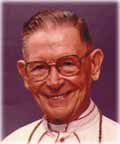
Bishop Giovanni VRAKKING, M.S.C.
(1940.05.25 – 1955)
Born:  1886.12.27 (Netherlands)
Ordained Priest:        1911.08.13
Consecrated Bishop:1940.09.21
Died: 1961.01.29 († 74)
Bishop of Surigao (Philippines) (1940.05.25 – 1955)
Titular Bishop of Cedamusa (1955 – 1961.01.29)
The first bishop was installed on September 21, 1940 in the person of Fr. John C. Vrakking, MSC.  But the joy over the birth of a new diocese was unfortunately short-lived because by then World War II broke out.  The missionaries were displaced.  Some of them stayed with their parishioners hiding in the mountains.  


Bishop Charles VAN DEN OUWELANT, M.S.C.
(1955.03.23 – 1973.01.10)
Born:  1911.07.03 (Netherlands)
Ordained Priest:        1936.08.10
Consecrated Bishop: 1955.06.21
Died:  2003.08.22 († 92)
  Bishop of Surigao (Philippines)(1955.03.23 – 1973.01.10)


Msgr. Vrakking got sick in 1953 and was succeeded by Fr. Charles van Ouwelant, MSC as administrator, and eventually on June 21, 1955, Msgr. Ouwelant was ordained second bishop of Surigao.  After 18 years, in 1973 he opted to resign and give way to a Filipino 
bishop.


On March 31, 1973, Most Rev. Miguel C. Cinches, SVD was installed the third bishop of Surigao whose place of origin was in Dauis, Bohol, born on February 7, 1932.  Bishop Cinches labored for 28 long but fruitful years in the diocese of Surigao until finally the fourth bishop


The fourth bishop of Surigao Most Rev. Antonieto D. Cabajog, DD 
was an Auxiliary Bishop of Cebu prior to his assignment in Surigao.
He was appointed on April 21, 2001 and installed on July 24, 2001.